




Ongi Monastery
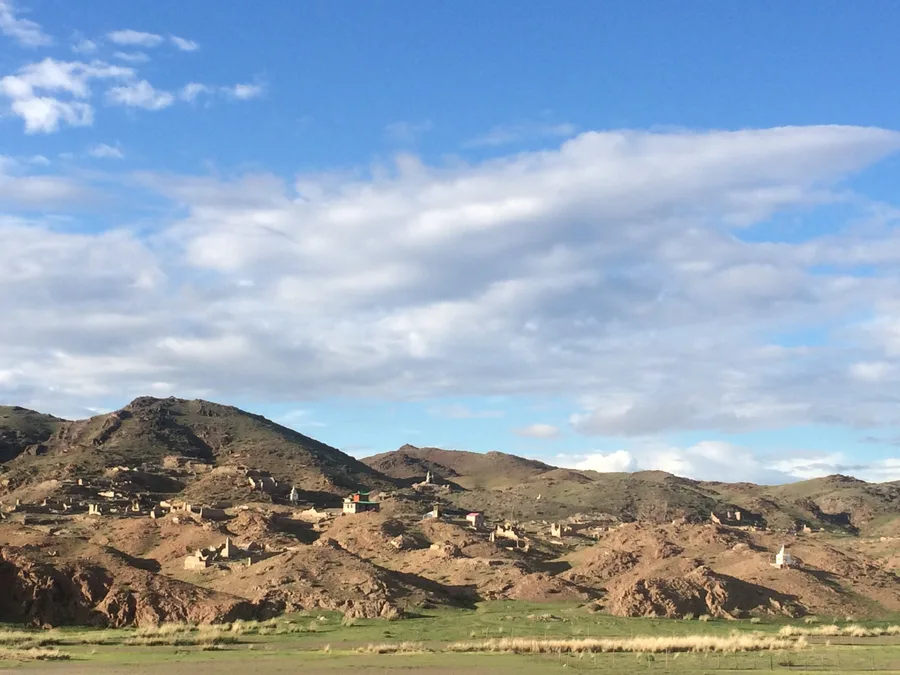
Ongi Monastery was a large monastic complex on both banks of the Ongi River in Saikhan-Ovoo district, Dundgovi Province. The ruins lie in a quiet valley at the foot of Saikhan-Ovoo mountain and tell the story of a once-thriving monastery and a turbulent chapter of Mongolian history.
The complex consisted of two monasteries: the Khutagt Lama monastery and the Bari Lama monastery, built on either side of the Ongi River. They were built between the mid-18th and early 19th centuries, and at their peak had around 28 temples and more than 1,000 monks.
Highlights
Stone and brick walls, the foundations of collapsed halls and old stupas are scattered along the mountain slopes over a wide area. Walking among them against the backdrop of the quiet Gobi hills feels very different from visiting a busy tourist temple.
Near the entrance, a small museum introduces the monastery's history, religious objects and relics, and prayers are still offered in a small rebuilt temple. The Ongi River runs close by, and you may see goats and sheep grazing peacefully along its banks.
History
The monastery flourished as a centre of learning and practice where Tibetan Buddhist monks gathered. During the religious purges of the late 1930s the halls were destroyed, many monks lost their lives and the site was left in ruins. The walls and foundations that remain today quietly preserve the memory of that time.
Visiting tips
Ongi lies a little over 400 km south of Ulaanbaatar, on the way toward the Gobi Desert. It is a convenient stop on tours to Tsagaan Suvarga and the South Gobi, and a relaxed way to see the Gobi steppe and nomadic life. Some paths are uneven, so wear comfortable walking shoes.
Related pages
Tell us your dates and group size.
Contact