




Bayanzag (Flaming Cliffs)
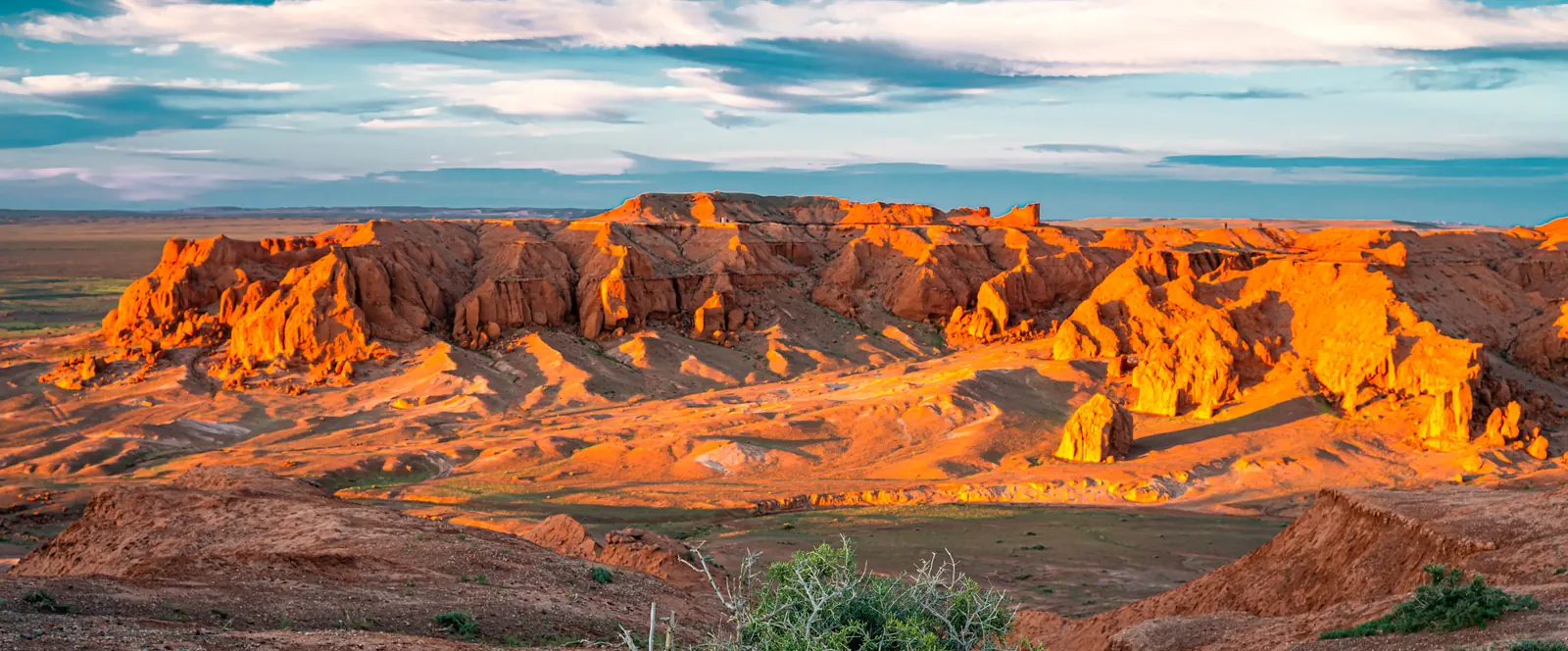
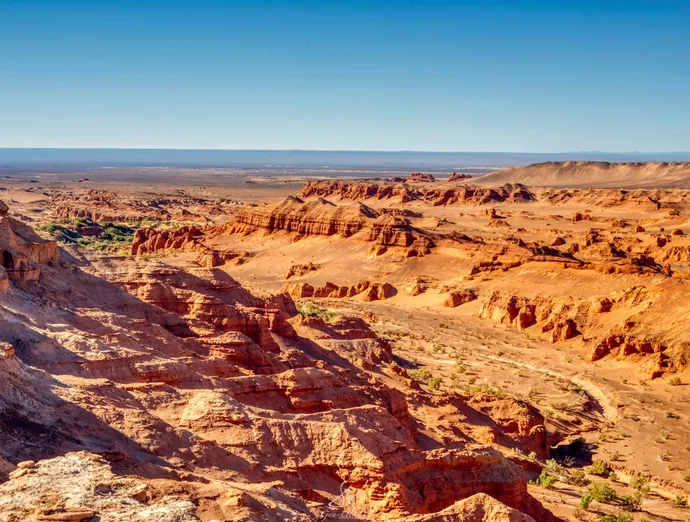
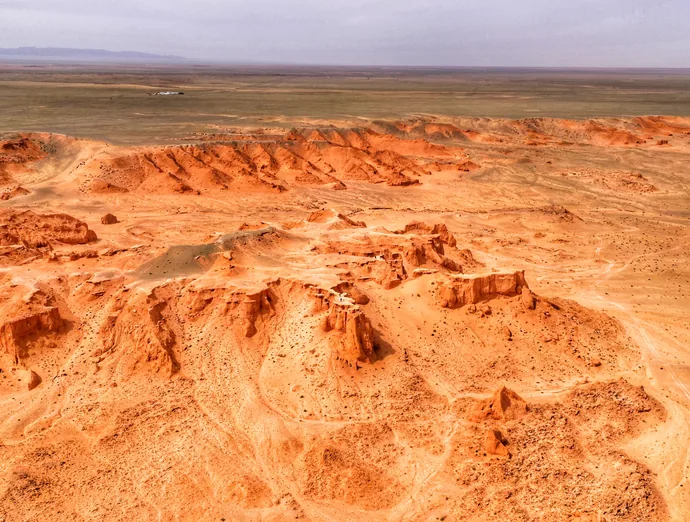
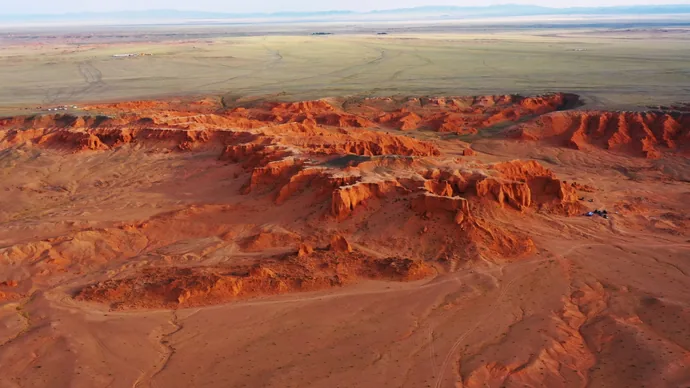
Bayanzag lies in a valley along the Arts Bogd mountains in Bulgan sum, Umnugovi Province, an area of clay sediments and saxaul forest. The formation runs north to south, about 5 km wide and 8 km long, and is divided into two main parts.
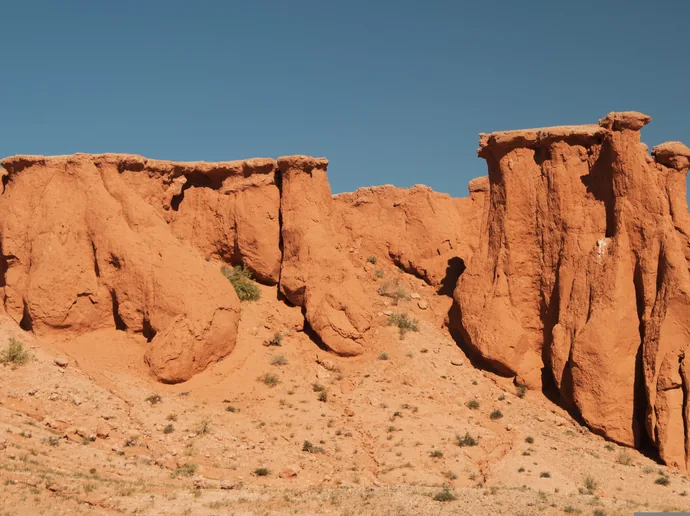
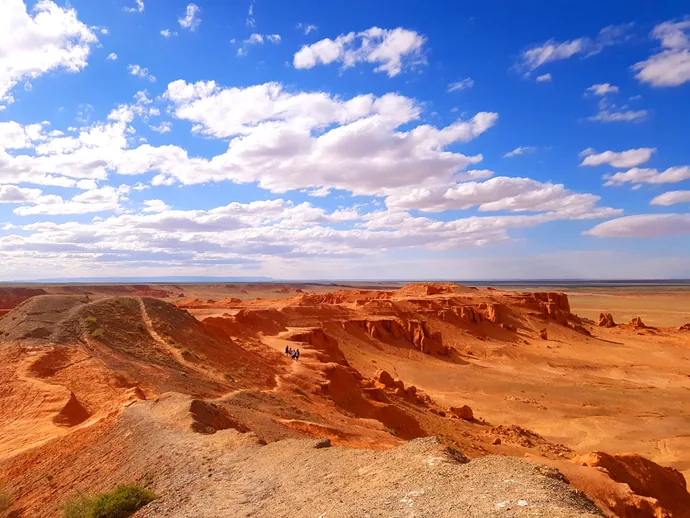
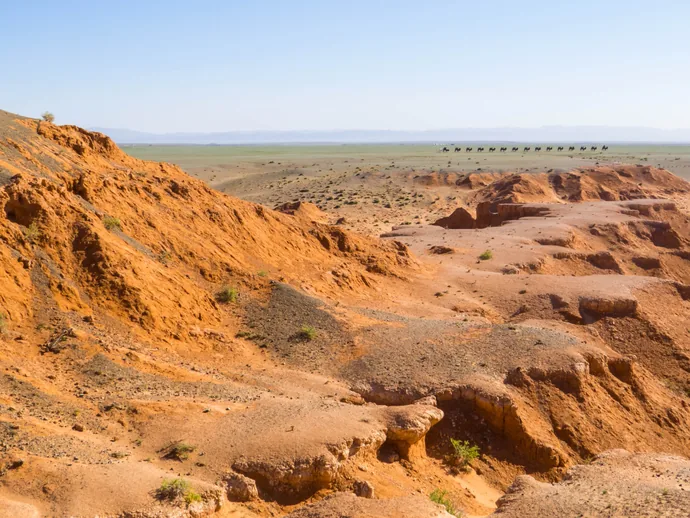
The southern part, "Ulaan Ereg" (Red Cliffs), is a set of red cliffs shaped into countless forms by wind and rain over thousands of years. The northern part is a grove of saxaul, a tree native to the Gobi, known as "Bayanzag". Hardened red clay cliffs are called "tsav", and the slender rock pillars standing above them "tsonj". The pillars are 20-50 m high and are nicknamed "table clay" and "camel clay" for their shapes.
The site is famous for the many discoveries it has brought to world paleontology, and it is where it was proven that dinosaurs reproduced by laying eggs. From 1921 to 1923 an expedition led by the American explorer R. C. Andrews came to Asia in search of traces of early humans. After covering about 1,600 km between Beijing and Uliastai, they saw the red cliffs blaze like fire in the setting sun on the way back, and named the place the "Flaming Cliffs".
The expedition found fossils including the giant rhinoceros-like Baluchitherium, Psittacosaurus, Oviraptor, Velociraptor and Saurornithoides, as well as dinosaur eggs and nests. In 1923, team member George Olsen examined a huge egg found at Bayanzag and learned that fossilized dinosaur bones were preserved inside, telling the world for the first time that dinosaurs laid eggs rather than giving birth to live young. Andrews also introduced the Mongolian Gobi to the world under the name "Gobi".
Besides fossils, Bayanzag also holds significant traces of ancient people, and it is tied to the history of the Tea Road linking Asia and Europe. Merchants who left Beijing entered Mongolia near Hohhot and today's Gashuunsukhait border crossing, passed through Bayanzag on their way to Kharkhorin, Uliastai and Khovd, and onward to Turkestan and Kashgar. Remains of the camel caravan route that confirm this survive here.
Bayanzag is also rich in typical Gobi animals, plants and birds. Besides saxaul, the characteristic woody plant of the Gobi, it is a key habitat of the parasitic plant desert cistanche (tsagaan goyo), which is listed in the Mongolian Red Book, plays an important role in the Gobi ecosystem and is valued as a medicinal plant. Birds such as the Mongolian ground jay, great bustard and Asian desert warbler live here.
Photo gallery
Gobi highlights
Tell us your dates and group size.
Contact