




Khongor Sand Dunes (Khongoryn Els)
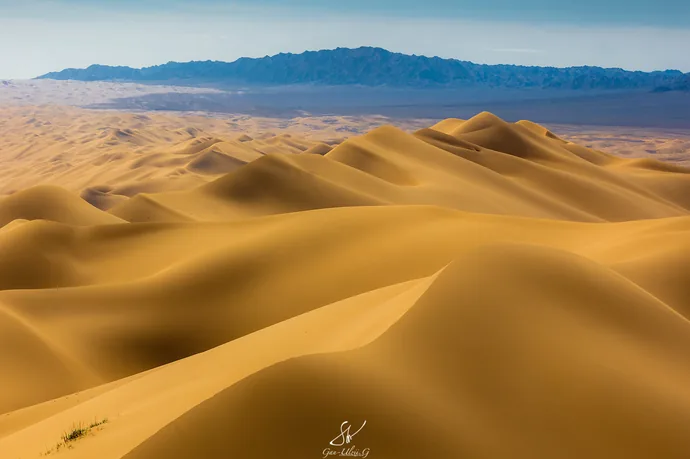
Khongor Sand Dunes (Khongoryn Els) lie in Sevrei and Bayandalai sums, Umnugovi Province, and stretch about 180 km along the back of the Sevrei and Zuulun mountain ranges. The dune field runs from northwest to southeast and covers about 965 square kilometers; it is 27 km wide at its widest in the northwest and only 800 m wide at its narrowest in the center.
From the top of a dune you see hundreds of sand hills rolling on into the distance. To the south are rocky mountains, in the middle sand where no plants can grow, and at the northern foot a river and a green oasis. Rainwater flowing down from the mountains passes through the dunes and soaks into the ground, then re-emerges at the northern edge as the Seruun and Arganga springs and flows west for more than 10 km along the dunes' edge. This is the Khongor River.
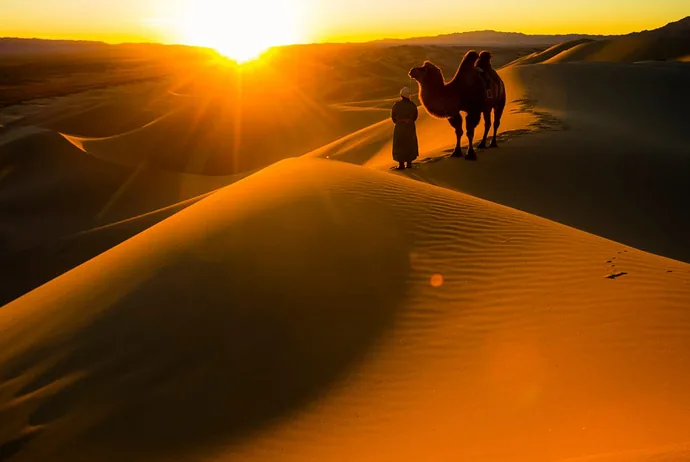
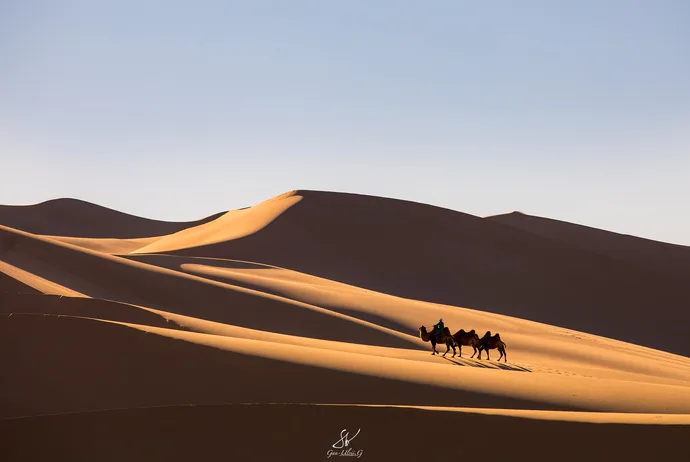
On windy days sandstorms hide the surroundings, while on calm sunny days the dunes glow golden and show off the grandeur of nature. Local elders say that the saxaul growing behind the dunes was once so tall and dense that a camel could vanish in it.
The highest part of the dunes is called "Duut Mankhan", the Singing Dune. From the top you can clearly hear people, livestock and objects blowing in the wind, and cars at the base look like tiny insects. Lie on your back and you may hear a sound like an airplane flying overhead. The sound is made by sun-warmed sand sliding in a gentle breeze, which is why local people call it the Singing Dune.
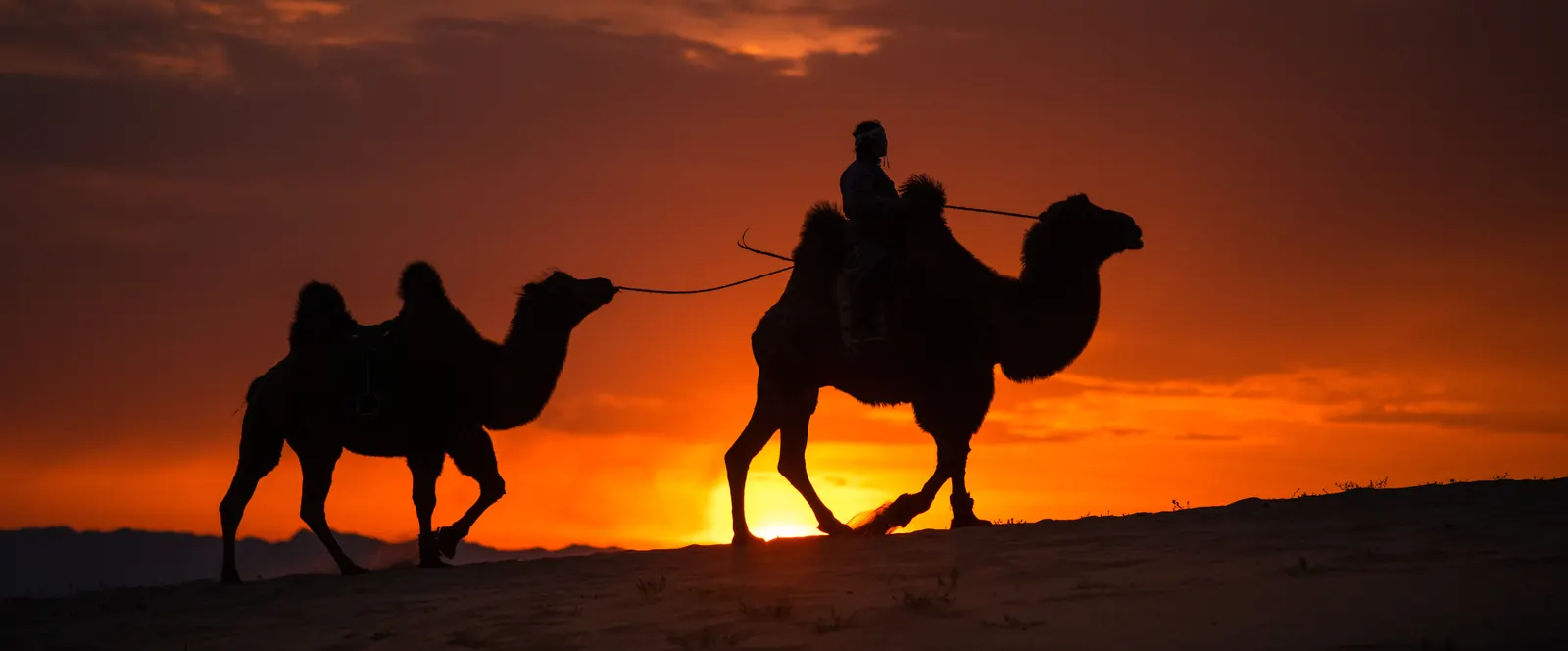
The best time to climb is sunrise or sunset. At midday the surface gets very hot and walking is hard. The sand is loose and the slopes are too steep to climb straight up, so walking along the ridges from one crest to the next is less tiring. Before reaching the edge of the dunes you cross about 2 km of shrubland, which is food for camels; riding a camel is easier than walking.
The mountain rising in front, Khatan Sevrei, has long been worshiped locally as protector of women, which is why it carries the title "Khatan" (Queen). Its rocks bear many petroglyphs, and a scene of four mounted hunters chasing five ibex is a rare find. Researchers think the simple bow-and-arrow figures may show Bronze Age bows.
A legend tells of a nobleman of the Gobi who had a queen named Sevrei, known for her bad temper. On the advice of his officials, he exiled her to a distant place. Angry, Sevrei threw her mirror away on the road, guarded by soldiers, and it shattered into many pieces that became "Toli Khad" (Mirror Rock). Every day she sat sadly on the riverbank combing her black hair. A hero named Khongor, one of the guards, took pity on the grieving queen and fell in love with her; the stones he stepped on along the path to the river all turned soft, and eventually became the sand dune called Khongor.
Later the nobleman, missing the queen he had scolded, came to Toli Khad to look at her face, and so a mountain called "Noyon" (Nobleman) appeared in front of the rock. With the passing years, Toli Khad itself faded to gray.
Photo gallery
Gobi highlights
Tell us your dates and group size.
Contact