




Khermen Tsav
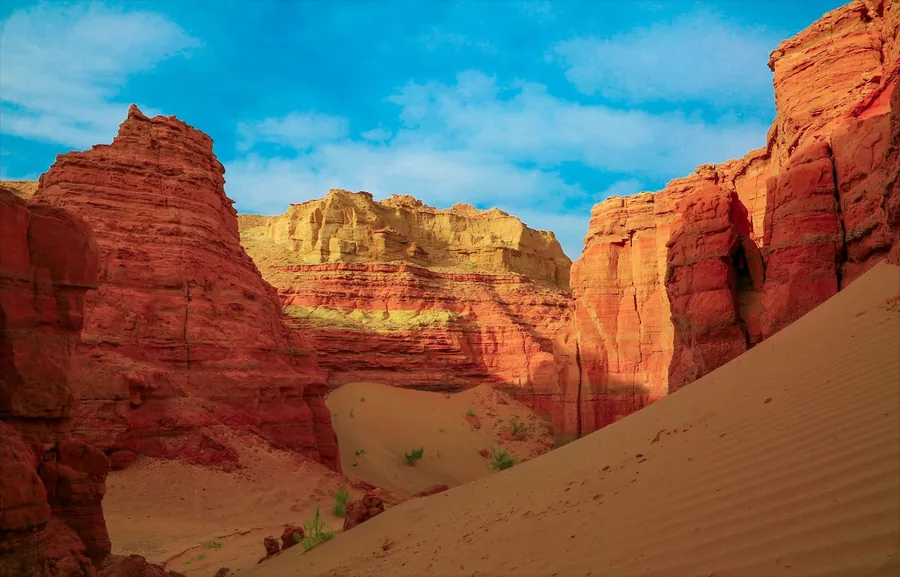
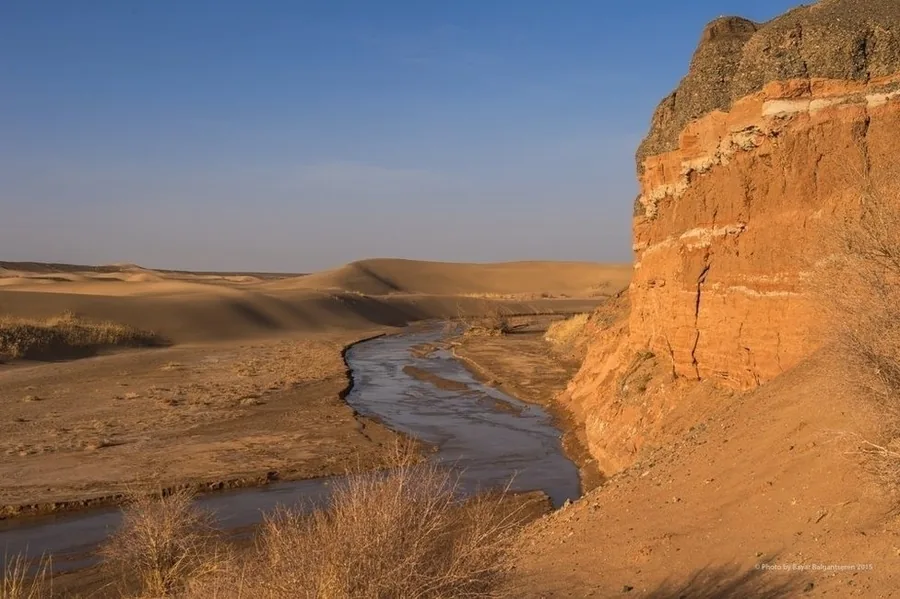
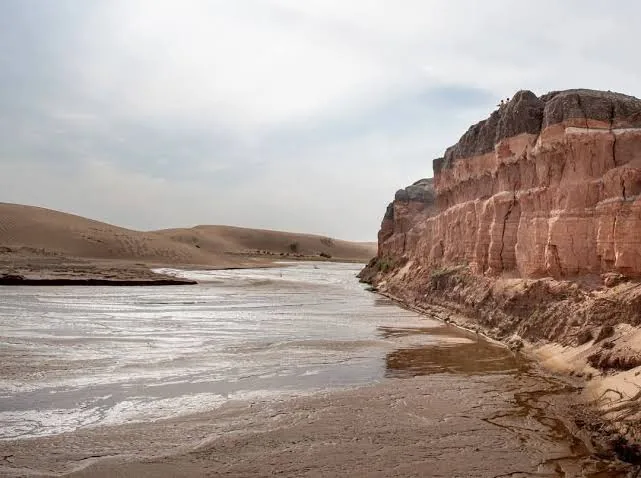
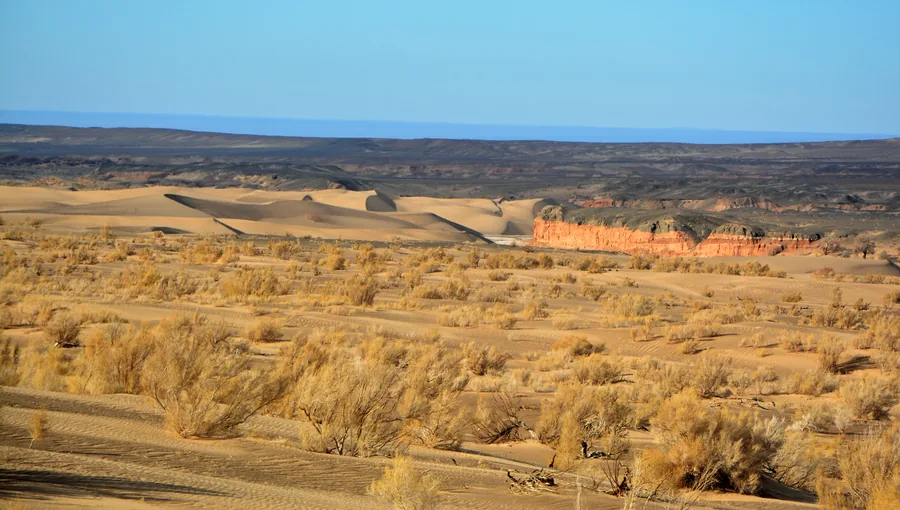
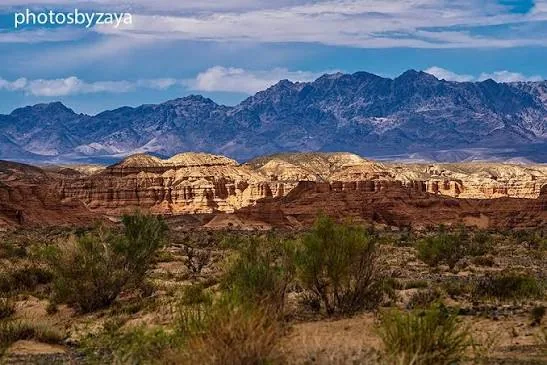
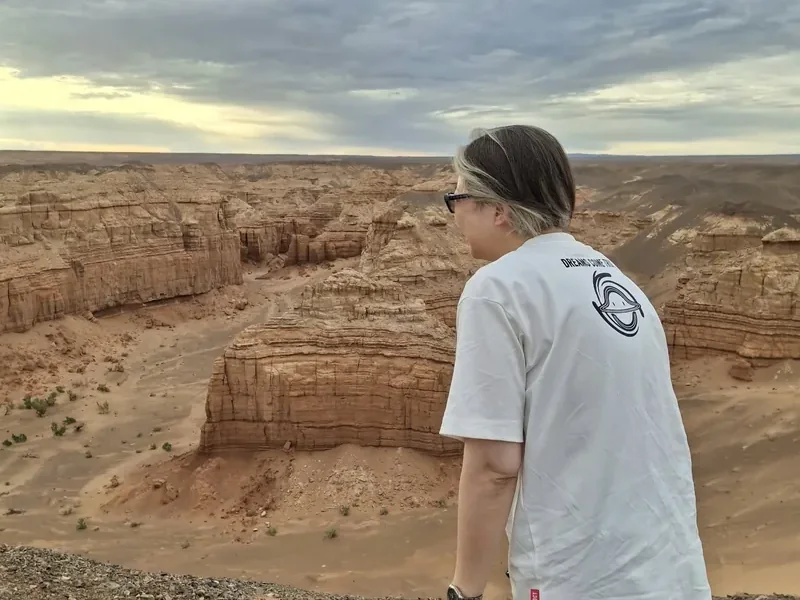
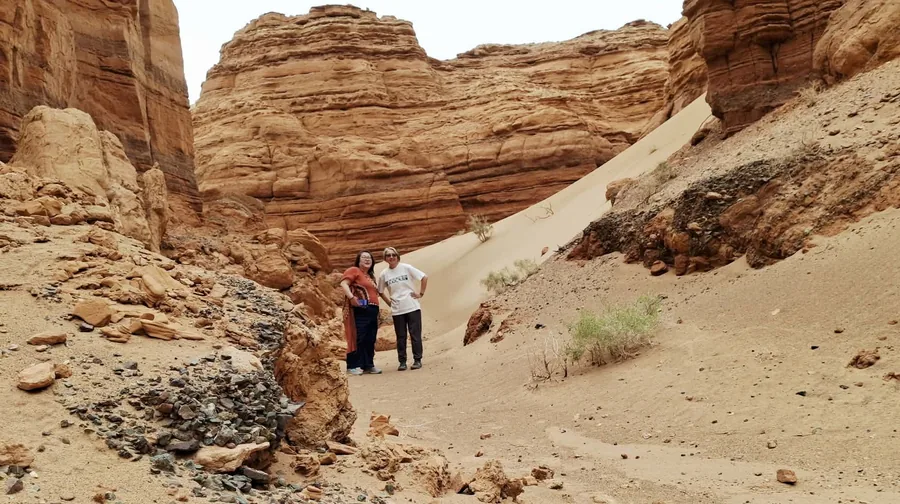
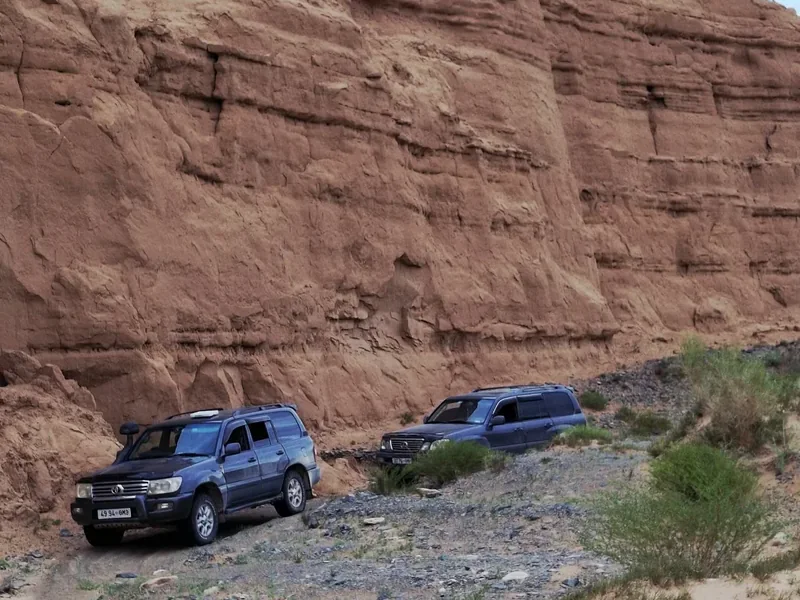
Khermen Tsav is a canyon in Gurvantes sum, at the far western edge of Umnugovi Province. It lies at the northwest foot of Shariin Sondog Uul, a spur of the Tosonbumba range, about 150 km from the sum center. It is a clay canyon more than 10 km long and 100-200 m deep, with small oases of elm, poplar and shrubs.
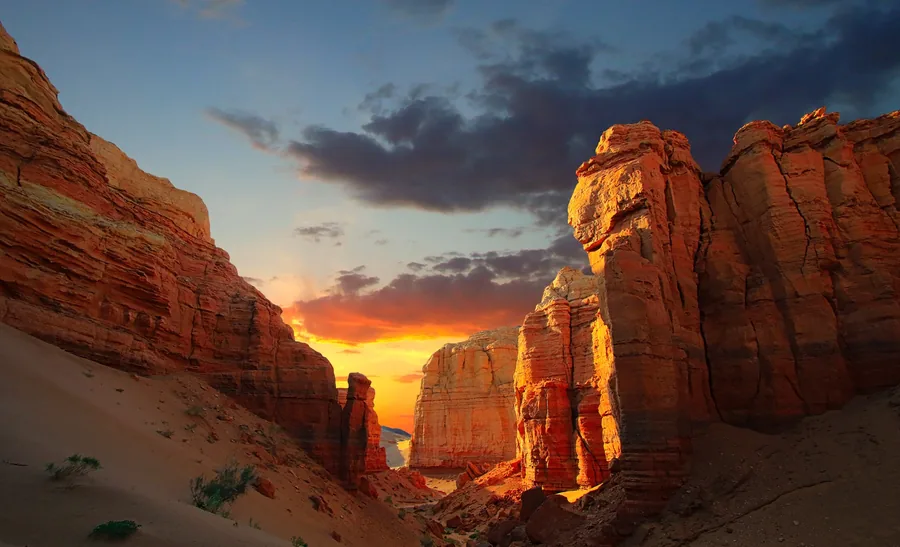
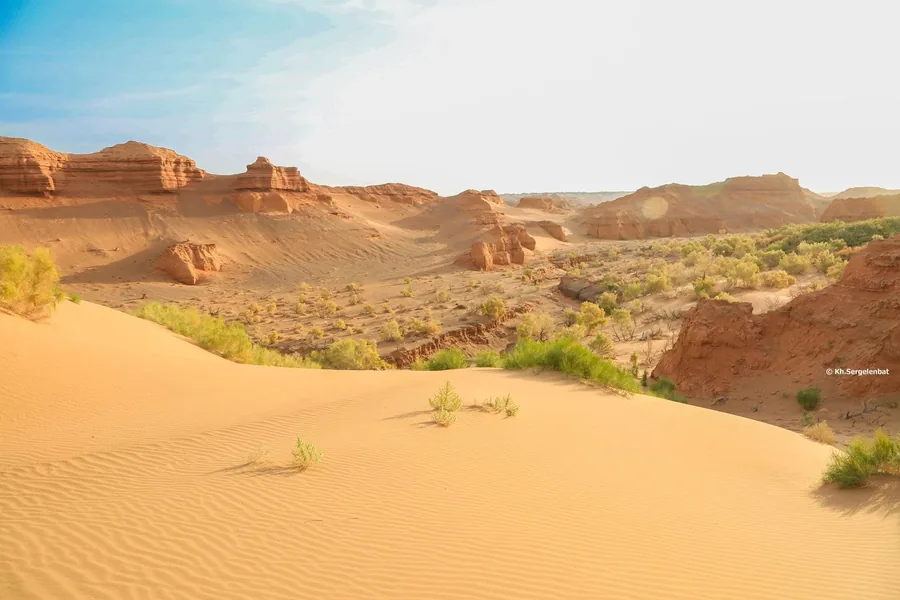
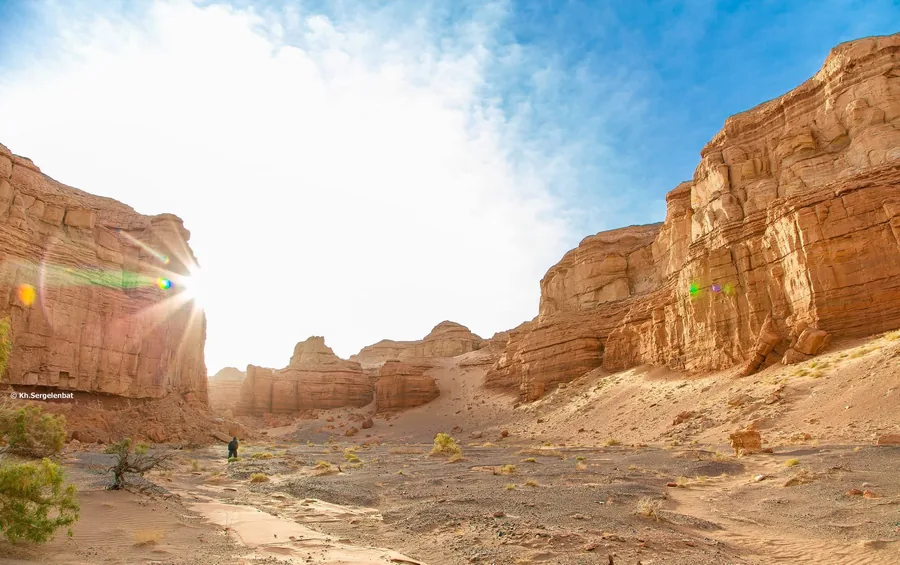
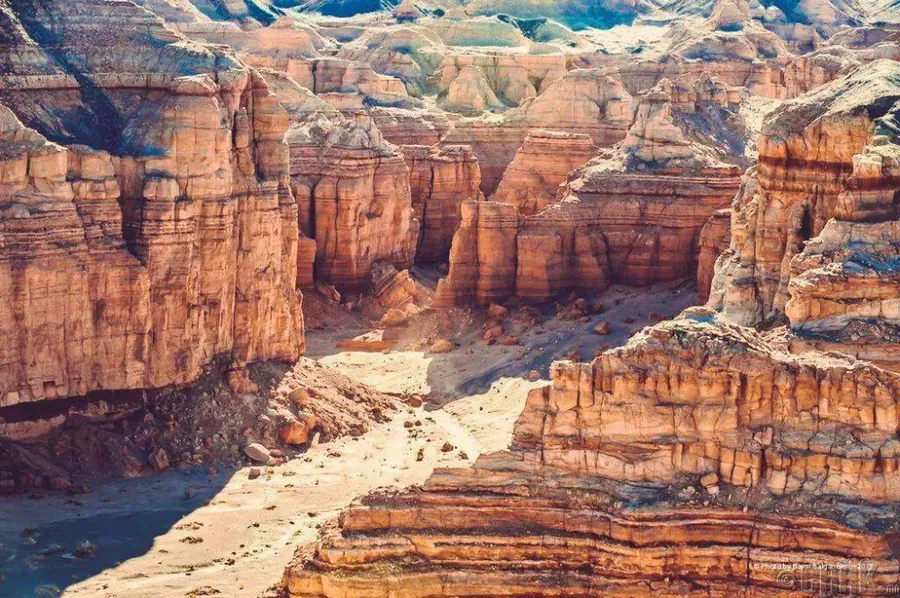
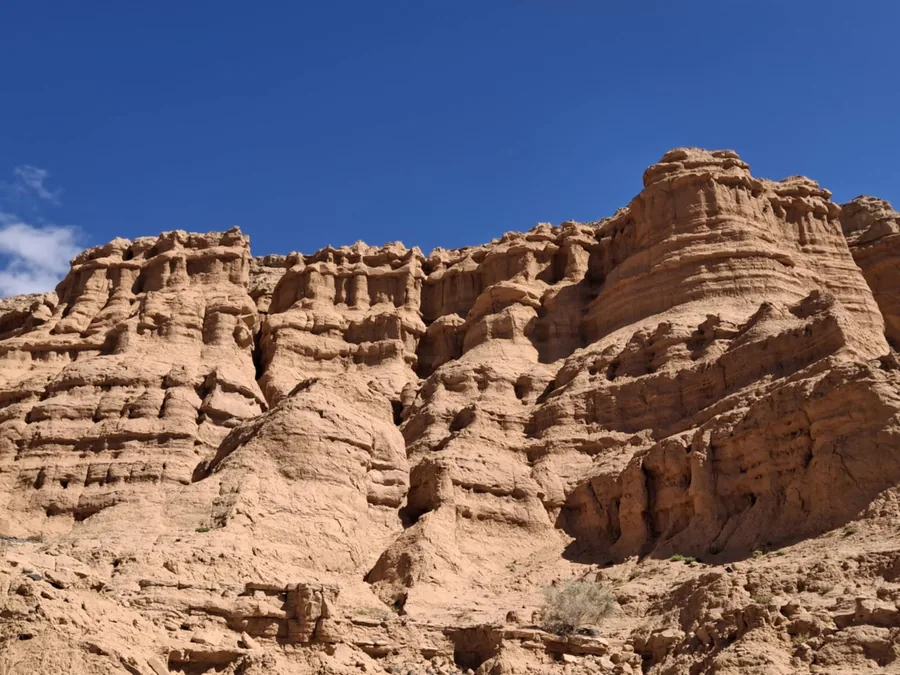
Shaped by erosion from sun, wind and water, it is a rare paleontological site with Cretaceous deposits. At its lower end it widens to as much as 10 km, and from a distance it looks like the ruins of a great city. It is counted among the wonders of Umnugovi and Mongolia and is the largest canyon of its kind in Mongolia, covering about 250 square kilometers, with no people, livestock or springs, only dry hills and ravines. The name "Khermen" means "wall", describing the wall-like cliffs.
Fossils of ancient dinosaurs, mammals, insects, birds, turtles, crocodiles, lake and river animals and many kinds of plants have been found here, helping to prove that the Mongolian Gobi has the world's richest dinosaur finds, often in complete skeletons, and is of great importance to world science.
In 1969 Mongolian-Soviet researchers including Academician R. Barsbold, L. P. Tatarinov and A. Rozanov discovered Khermen Tsav, Khaichin Uul and other new fossil sites in the Ingen Khuvur basin. Since then expeditions from the Mongolian Academy of Sciences and abroad have come almost every year, and international joint research continues. Bones of Therizinosaurus, Saurolophus, Tarbosaurus, horned dinosaurs and Pinacosaurus have been found and are among the treasures of the Mongolian Paleontological Museum.
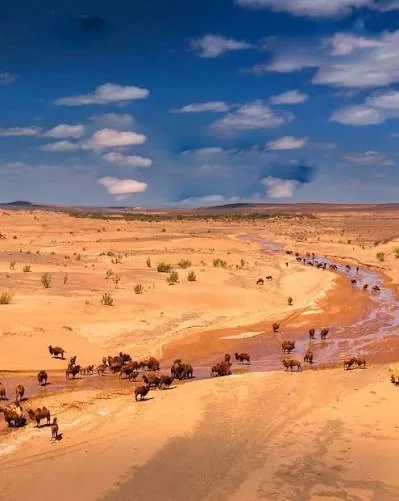
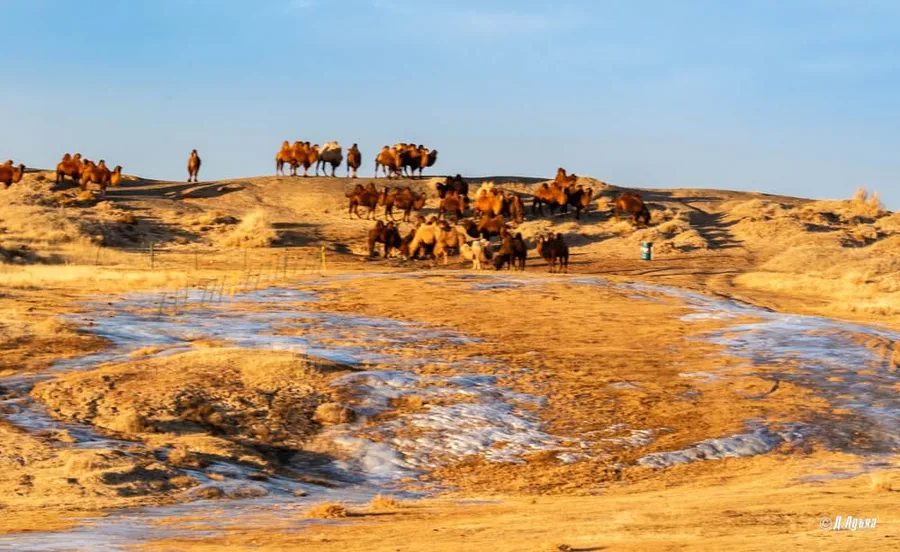
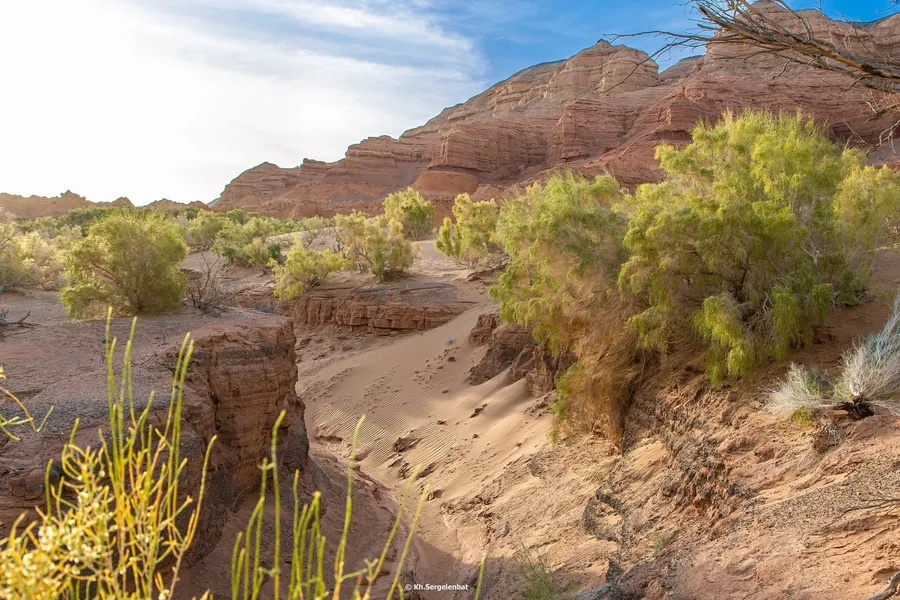
There is no flowing river, but rain forms pools in places. Groves of 3-6 m elm and poplar, sukhai, reeds and saxaul grow here. Large lizards native to the Gobi, black-tailed gazelle and wild ass (khulan) live here, and wolf tracks are common. Birds also stop here during spring and autumn migrations.
Khermen Tsav is about 490 km from the provincial center, Dalanzadgad, and about 310 km from the Khongor Sand Dunes. On the way you pass Zulganai, Narandaats, Gurvantes and other sights. The road is not easy, there is no water or settlement, and temperatures in summer can reach +50 C in this basin, so locals sometimes call it the "Valley of Death". There are two entrances and the risk is real, so visiting alone, in a pair or with a single vehicle is discouraged; a local professional guide is recommended. At Narandaats, 70 km from Gurvantes sum, the "Baatar's Cradle" tourist camp is the closest place to stay.
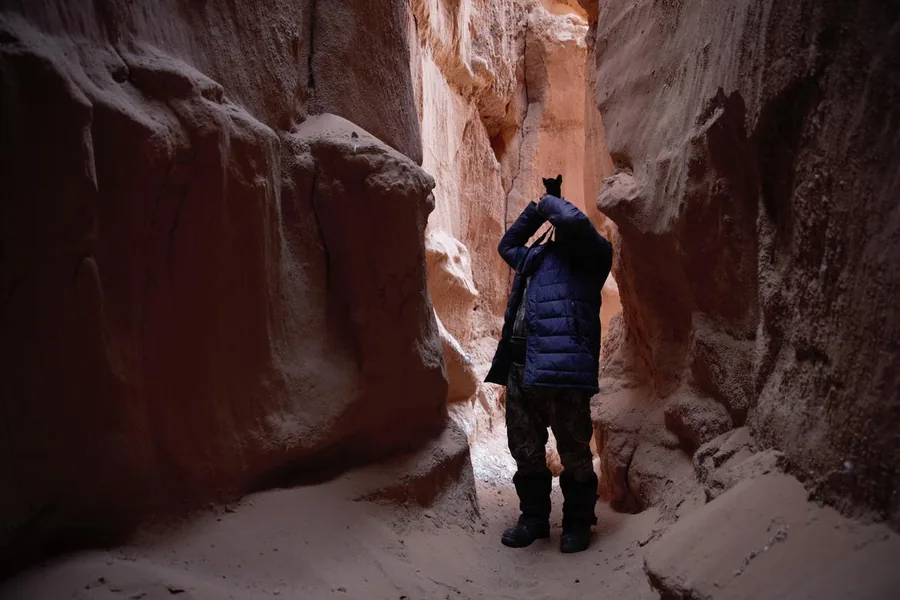
The strange red clay pillars and gorges recall modern avant-garde art, and brave travelers are sure to come away with unforgettable memories. The area became known to tourism in 1993 when today's Natur Tur and Juulchin Gobi companies visited it. Visitors should not climb the walls and should protect the unique formations; walls eroded by the Gobi's strong winds and storms may collapse.
On the Way: Nemegt Uul
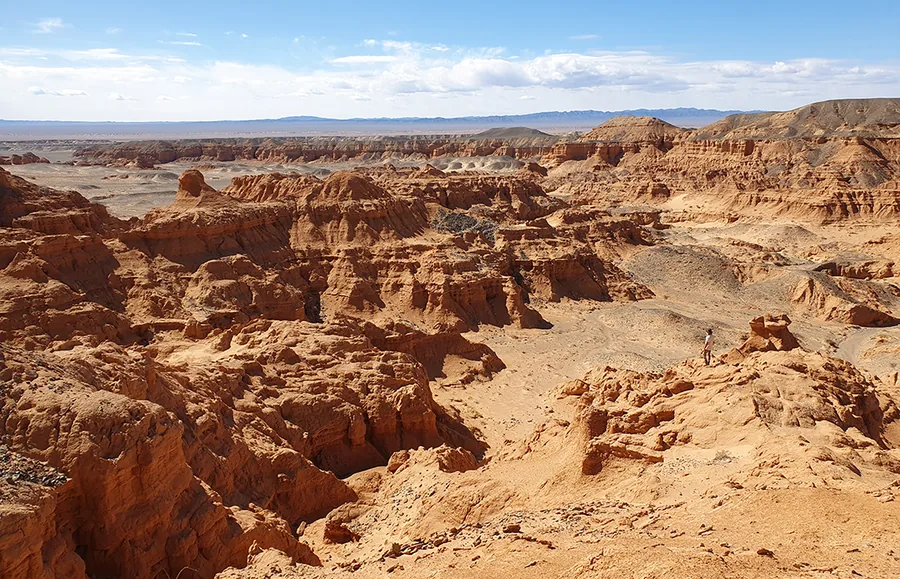
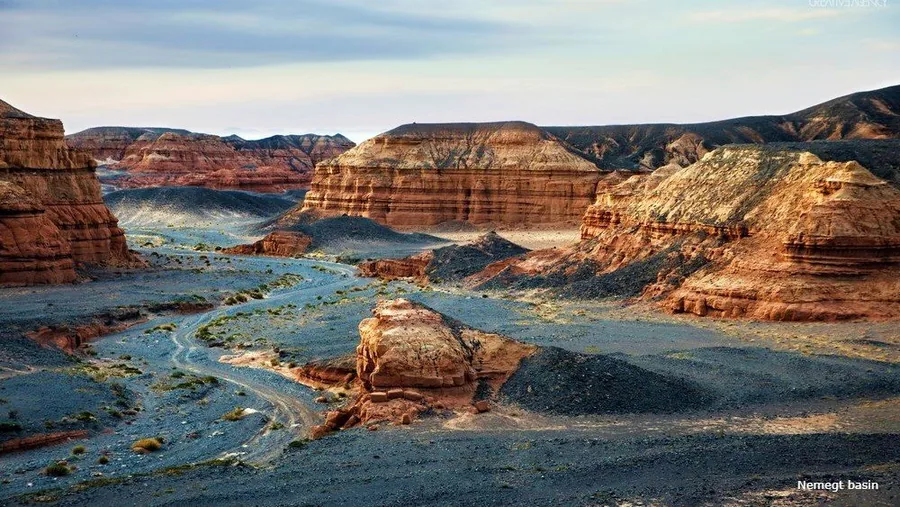
Nemegt Uul is in Gurvantes sum, Umnugobi province, about 400 km west-northwest of Dalanzadgad. It is one of the Gobi's most famous dinosaur fossil localities. Like Bayanzag, it is a land of reddish-orange cliffs, with eroded valleys branching off in many directions. It is a landscape well worth stopping for on the way to Khermen Tsav.
Nemegt Uul, Altan Uul, Tögrögiin Shiree, Ukhaa Tolgod and Khermen Tsav are all well-known dinosaur sites in world paleontology, and expeditions from many countries have dug here. At Nemegt, tall cliffs rise sheer and run on for a long way. Shaped by flowing water, they look like ancient castles and towers, and dinosaur bones are found inside them.
From 1960 to 1970, joint Mongolian, Soviet and Polish expeditions dug here repeatedly and brought out many internationally important fossils. Some researchers call the area the "Dragon's Tomb." Even the saxaul trees that grow in the Gobi barely take root in the Nemegt valley, and plants and animals are few, which leaves a stark, empty landscape. It is also said to resemble the surface of Mars, and there is even a project idea to use it as a training ground for people preparing to travel into space.
Nemegtosaurus: In 1946 a joint Soviet-Mongolian expedition led by the Soviet paleontologist Ivan Efremov found the skull of a huge plant-eating dinosaur (a sauropod) in these mountains. It was named Nemegtosaurus (Nemegtosaurus) after the mountain, and it is one of the best-known dinosaurs of the Gobi.
Tyrannosaurus Bataar (Tarbosaurus): In 2012 an auction in New York was about to sell a nearly complete skeleton of a large meat-eating dinosaur that had been taken illegally out of the Mongolian Gobi. Researchers including Prof. Philip Currie from Canada and the Mongolian paleontologist Bolortsetseg determined that it came from Nemegt Uul. The auction was cancelled and the fossil was returned to Mongolia. "Bataar" is the Mongolian word for "hero," as explained by the Mongolian paleontologist Dr. Barsbold.
Gobiraptor: From the Nemegt valley came part of the jaw of a small, bird-like dinosaur that lived about 70 million years ago. It was named Gobiraptor. The Nemegt valley then had rivers and lakes, and the animal is thought to have lived in that humid climate.
Nemegtonychus: In 2019 a new species of feathered meat-eating dinosaur was announced and named Nemegtonychus. New discoveries are still being made at Nemegt Uul.
On the Way: Zulganai River (Zulganai Gol)
The Zulganai River lies in Gurvantes sum, the westernmost part of Umnugobi province, and is counted among the larger of the 33 oases of the Mongolian Gobi. It is a beautiful natural spot at the west foot of Altan Uul, about 70 km from Khermen Tsav.
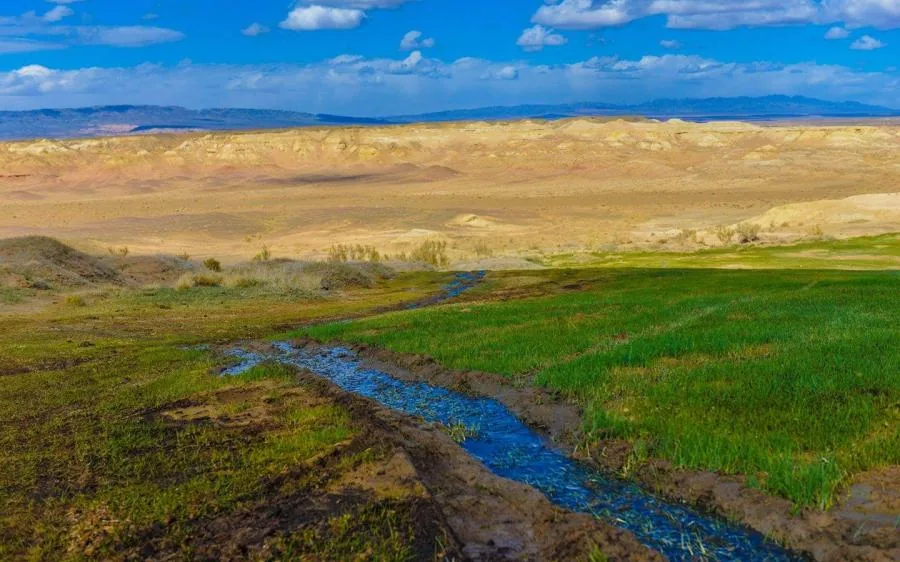
The river begins where spring water from the foothills of Altan Uul, Tost Uul and Talyn Khairkhan gathers and flows out. After about 12 km to the northwest, it slips beneath the sand, runs underground, and then comes up to the surface again, which is a rare feature. The water is slightly salty but can be used for drinking.
Along the river grow reeds, saxaul and other desert trees and plants, and the area is ringed by groves and sand dunes. Because so much greenery spreads out in the middle of the Gobi, local people call it "Zuun Mod-Zulganai," meaning "Zulganai of a hundred trees." It is an important oasis that helps keep the Gobi's nature and ecology in balance, and researchers and biologists come to study it through the seasons.
The Zulganai is said to swell and come to the surface at night, and small black flies become many in the evening. The trees and plants around it can grow tall enough to hide a camel, and they soften the harsh sun and the sticky heat. On the way to Khermen Tsav it is a good green stop to rest.
On the Way: Naran Daats
Naran Daats is about 96 km west-northwest of the center of Gurvantes sum, and roughly 400 km west-northwest of the provincial center Dalanzadgad. It is one of the Gobi's rare oases with clean spring water.
Unlike the usual Gobi hills, several springs of clean water come up near the top of a single hill, which is its most unusual feature. The flow is about 5 liters per second. Along the spring stream grow Siberian peashrub (Caragana), Potaninia and many other desert plants.
The clay cliffs and rock layers spreading around it were laid down in the Late Cretaceous, tens of millions of years ago, and fossils of many kinds of dinosaurs and ancient animals and plants are still being studied there.
West of Naran Daats are more sights: Khermen Tsav, called the "Grand Canyon of Mongolia," the green oasis of Zulganai, and the Toson Bumba range where snow leopards live. Naran Daats lies in the southwest of Umnugobi province and is also an important stopping point for travelers heading toward Bayankhongor and Gobi-Altai. Dinosaur researchers and biologists from Mongolia and abroad, and travelers interested in Gobi nature, often stop here. A tourist camp has been built nearby so visitors can enjoy this unusual landscape.
Nearby: Bugiin Tsav
Bugiin Tsav is in Bulgan sum, Umnugobi province, about 50 km north of Khermen Tsav, and is a place very rich in dinosaur fossils.
Dinosaur bones from about 70 to 80 million years ago can be seen lying exposed on the ground. We cannot bring the dinosaurs back to life, but the scenery calls up an image of the Earth long ago.
A Tarbosaurus skeleton found here was displayed at a temporary paleontological museum set up in a shopping center in Ulaanbaatar.
Photo gallery
Gobi highlights
Tell us your dates and group size.
Contact