Mongolia tours with free WiFi during your trip – leave it to a local specialist travel company.

Contact us for advice and quotes on local Mongolia toursEmail:info@nomadmongolia.com

Dadal, the Homeland of Chinggis Khaan
The Khentii Mountains, part of the huge 1.2 million hectare Khan Khentii Strictly Protected Area spreading in the northwest corner, gave it its name. The Kherlen and Onon rivers, told of in the Mongolian history book "The Secret History of the Mongols," which describes the life of Chinggis Khaan, flow here. Khentii, the historic center of Mongolia, is famous as the source of Mongolia's fastest horses. Dadal lies in the north of Khentii Province, about 585 km from the capital Ulaanbaatar. Dadal sum is said to be the birthplace of Chinggis Khaan. In the center of Dadal sum, at 800 m above sea level, is a mineral spring called Lake Gurvan. There in 1962 the first monument to Chinggis Khaan was erected. To the north, a small hill 900 m above sea level in a pine forest is called "Deluun Boldog," and this is said to be the place where Chinggis Khaan was born. West of the Lake Gurvan camp, a spring flowing north into the Balj River is called "Khajuu Bulag," said to be Chinggis Khaan's drinking water. Buryats live in Dadal sum, and if you visit their gers you can experience their unique way of life. Buryat bread in particular is superb.


* Prices, times, number of services and opening hours shown are guidelines. They may change, so please ask us for the latest information.
Detailed Guide to Dadal and Sites Related to Chinggis Khaan
| Location | About 600 km northeast of Ulaanbaatar. A small town of about 3,000 people surrounded by forest |
|---|---|
| Main attractions | Deluun Boldog (along the Onon River), said to be the birthplace of Chinggis Khaan, and related historic sites |
| Local culture | Northern Khentii Province, including Dadal, is known for many Buryat Mongols. Their language and costumes are distinctive, and many shamans are active |
| Admission | The attractions are inside Onon-Balj National Park, and you pay the entrance fee at the ranger station. If no staff are present, you can buy tickets at the shop next to the Deluun Boldog parking lot |
Overview of the town
In Section 59 of "The Secret History of the Mongols," Mongolia's oldest book, there is a description that Chinggis Khaan "was born at Deluun Boldog on the Onon River." Mount Deluun is said to be the mountain in the center of Dadal sum, and has long been regarded as Chinggis Khaan's birthplace. Many Mongolians and foreign travelers visit. Related historic sites are scattered about, but the evidence is not clear.
Getting Around Dadal
Forest-covered Dadal is blessed with timber, and wooden single-story houses line the town. Within 2 km of the center are the Chinggis Khaan birth monument, the birth hill Deluun Boldog, and the spring Khajuu Bulag, said to have been used for his first bath, and you can walk around them at a leisurely pace. It is best to aim first for Deluun Boldog.
Chinggis Khaan Birth Monument (Чингис хааны гэрэлт хөшөө)
A monument erected in 1962 inside the Chinggisiin Gurvan Nuur resort to commemorate the 800th anniversary of Chinggis Khaan's birth. It is 12 m high, 10 m wide and 4 m deep. The figure of Chinggis Khaan is depicted within the shape of a blazing fire. The words "Though this body perishes, my nation is eternal" are carved in Mongolian script. At the time of its construction socialism was at its height, and it is also a legacy of dark history, as researchers and politicians involved in building it fell from power or were executed under the pro-Soviet regime. It is the earliest monument built in modern times.
| Location | About 1.5 km east of the town center. The road is bad, with wetlands on the way. About 45 minutes on foot |
|---|
Deluun Boldog (Дэлүүн болдог)
The hill where Chinggis Khaan is said to have been born in 1162. The name means "spleen hill," coming from the shape of the hill lying northwest on the bank of the Onon River in the upper reaches of the Onon and Balj rivers, which resembles a spleen. A monument on the hill is inscribed in Mongolian script: "Deluun Boldog, Chinggis Khaan, born on the 16th day of the first month of summer, 1162." The viewing platform is a power spot. Souvenir shops near the parking lot have plenty of goods such as the "red willow ghost whip" for warding off evil, and homemade rhubarb juice is recommended too. It is said every Mongolian visits at least once. There is a commemorative obo.
| Location | About 2 km north of the town center, about 1 hour on foot |
|---|
Khajuu Bulag (Chinggis Khaan's Spring) (Хажуу булаг)
A spring with a legend that Chinggis Khaan was washed in it when he was born and his mother Hoelun boiled tea with this water. It is said to dry up in droughty summers, though local people say a distant cause is that a former president's family drilled near the water source around 2013. A blue khadag is wrapped around the green tree in the center where the clear water wells up.
| Location | About 2 km northwest of the town center, about 1 hour on foot. About 1 km from Deluun Boldog, about 30 minutes on foot. From above you can see a wide fence surrounding pine trees, but the spring is further beyond |
|---|
Temujin Museum (Тэмүжин музей)
A small museum northwest of Dadal town hall. The Dadal Local Museum is also attached on the south side. Inside are materials from when Chinggis Khaan called himself Temujin. It is often closed, but if you ask at the accommodation or the town hall, they will call a staff member. There is a bronze statue of him as a child.
| Location | Next door west of Dadal town hall |
|---|---|
| Opening | 9:00–18:00 (lunch break 13:00–14:00). Open daily (closed in winter) |
| Price | 5,000 Tg. Photography 5,000 Tg, video 10,000 Tg |
Khar Zurkhnii Khokh Lake (Хар зүрхний хөх нуур)
A lake south of Mount Khar Zurkh in Tsenkhermandal District, Khentii Province. At 1,675 m altitude, two lakes, large and small, are connected. It is said that at a council of nomadic tribal chiefs held on the shore of this lake in 1189, Temujin was raised to the rank of khan and received the title Chinggis Khaan.
Ugluugchiin Kherem (Өглөгчийн хэрэм)
Ruins of a fortress in Batshireet District. The walls are 2.5 m thick and 2.5–4.5 m high. A stake-shaped rock near the center of the fortress is called "Chinggis Khaan's hitching post" by local people. It is noticeable even from afar.
Rashaan Khad (Рашаан хад)
A huge rock east of Mount Bindar in Batshireet District. In this whole area many deer stones (from the Late Paleolithic, Mesolithic, Neolithic, Bronze and Iron ages) and tombs (from the Xiongnu, Khitan and Mongol Empire periods) have been found. On Rashaan Khad, pictures and writing drawn by many people over a long time also remain. Water dripping when it rains is said to be good for eye diseases.
Ikh Bindar Ovoo (Их биндэр овоо)
An obo located east of Mount Bindar in Batshireet District. It is said that the reincarnate lama Zanabazar named it the "virtuous obo" and worshipped it. From its form and the many rock paintings, deer stones and tombs around it, researchers at home and abroad consider it an obo that has been worshipped since very ancient times. According to a survey by the Italian Mongolia researcher Igor de Rachewiltz (1997), the last festival was held in 1927. Two kinds of festivals were held, one worshipping Chinggis Khaan and one Buddhist.
Accommodation guide
A Buryat-run lodging about 1 km east of the town hall costs 20,000 Tg per person (shared toilet and shower), breakfast 5,000 Tg; horse riding and fishing can be arranged, and it is said to have many backpackers. There is also a camp near the birth monument with a restaurant serving delicious Buryat-style bread. It operates around June to September, and names and prices change by year.

Chinggis Khaan Footsteps Tour, Binder Village, Dadal Village, 6 days
Visit the homeland of Chinggis Khaan. See the monument marking the birthplace of Chinggis Khaan. The monument is a huge 10 meters tall, with a portrait of Chinggis Khaan and a picture of the war banner called the "Sulde" carved on its face.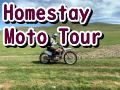
Off-road motorbike tour with a nomad homestay, 4 to 8 days
Motorbike touring starts from a ger base. Horse trekking is also possible if you wish. After practice, try riding by yourself to nearby grasslands and hills. Beginners can join.



Basic Mongolia Information
Basic information

Tourist Destinations in Mongolia
Destination
Travel Guide
Travel guide
Winter Tours
Winter tours
Tailor-Made Travel
Tailor-made
Tourist Events
Tour events
Tourist Camps
Tourist camps
Ulaanbaatar Sightseeing
UlaanbaatarCity Tour

Mongolian Food
Mongolian Foods
Restaurant Guide
Restaurants
Gallery
Gallery
Car Rental
Car Rental
FAQ
FAQ